 Flag It First
Is This Shop Fake? 4 Checks Before You Pay
Video · 3:21 · published 8 Nov 2026 · sources checked October 2026
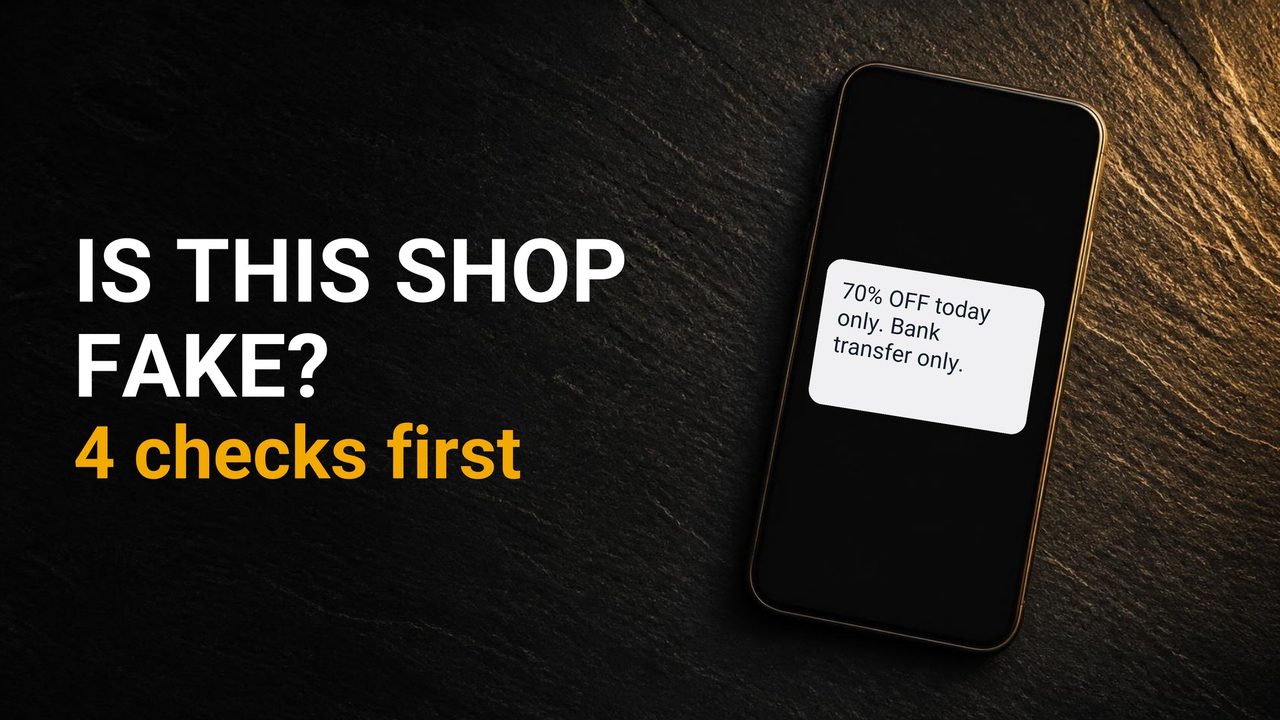
Playing this video loads YouTube, which may set cookies. Watch on YouTube instead.
Quick answer
- How did you get there? If it came from an ad or a message, go to the company directly instead.
- Check the website at getsafeonline.org/checkawebsite (Get Safe Online with Cifas).
- Independent reviews and a real street address. A padlock doesn't prove a shop is real.
- Never pay by bank transfer. Use a credit card if you have one: for a single item over £100, up to £30,000, the card company shares responsibility if things go wrong. A debit card gives less protection, but you may get a refund through "chargeback".
- Already have an account with the shop? Don't let it store your card details, use a strong password you don't use anywhere else, and turn on 2-step verification.
The bargain
Found a bargain on a website you've never heard of? Before you pay, do four quick checks. And if the only way to pay is a bank transfer, stop there. Police figures show £11.8 million was lost to online shopping fraud between November 2024 and January 2025. So let's check.
Check 1: How did you get there?
Check one: how did you find this shop? If it came from an ad, a social media post or a message, be careful. The NCSC says it's easy for a criminal to copy the design of a real website. If it's a brand you know, don't use the link. Go to the company directly.
Check 2: Check the website
Check two: put the web address into Check a Website. It's a free tool from Get Safe Online, with the fraud prevention service Cifas. It tells you whether a website is likely to be legitimate or a scam.
Check 3: Reviews and a real address
Check three: look for reviews on several independent websites. Citizens Advice says don't rely on reviews on the shop's own site. And look for a real address. It should have a street name, not just a PO box. A padlock in the address bar doesn't prove the shop is real.
Check 4: How you pay
Check four: how you pay. The NCSC says never pay by direct bank transfer. Use a credit card if you have one. For a single item over £100, up to £30,000, the card company shares responsibility if things go wrong. Using PayPal or Google Pay? Check what cover they give. And check out as a guest, without saving your card.
The pressure trick
One more warning sign: pressure. "Today only." "Just two left." The NCSC says scammers use time limits and scarcity to rush you. And if a deal seems too good to be true, Citizens Advice says it might be a scam.
Already paid?
Already paid a shop you're now not sure about? Tell your bank straight away, and report it to Report Fraud. That's reportfraud.police.uk, or 0300 123 2040. In Scotland, call Police Scotland on 101. Paid by bank transfer? UK rules now say banks must refund scam victims, up to £85,000, unless you were grossly careless. Report it within 13 months. And report the fake shop to the NCSC. It's free, and it takes a minute.
Sources
- ncsc.gov.uk
- ncsc.gov.uk
- check.getsafeonline.org
- citizensadvice.org.uk
- legislation.gov.uk
- psr.org.uk
- ncsc.gov.uk
- reportfraud.police.uk
Flag It First is independent and not affiliated with Get Safe Online, Cifas, any shop, bank or the police. General information, not legal or financial advice. Menu names can vary by phone model and software version. On-screen phone screens in the video are mock-ups or masked screen recordings. Some background images are AI-generated, and the voiceover is AI-generated.